Backyard High Jinks

Gardening, beekeeping & general backyard high jinks.

Sunday, March 30, 2014

Spring is Buzzing!

As Spring is meandering it's way home, there have been a few warmish days over the last few weeks. warm enough anyway for the bees to get out and stretch their wings. It looks like Winter has not been as hard on our bees as last year. Both our hives are full of bees and I have seen new bees making orientation flights outside the hives which means the Queens are both busy laying. I think it is going to be a very busy bee summer! I caught some bees in one of my planters which is having drainage issues. It's the perfect spot for collecting water.


The past two weeks they have been collecting a yellow-orange pollen like crazy. We believe it to be the Alder tree pollen which is in full bloom right now, but it could also be dandelion flower pollen which is also highly available. Flowering Currants are also blooming, as well as a myriad of fruit trees like cherry and plum.


Alder Catkins
There isn't much nectar this time of year (though the maple trees will be blooming soon) so Matt put the feeders on last weekend to supplement. From the looks of the activity at the hives, the ladies are thriving!

Friday, October 4, 2013

Raw Honey Explained

Mmmmmmm! Honey is so yummy. But what is raw honey? You may have heard this term, or you may wonder why some honey you buy is not "raw". I will explain.

This honey bee is using her proboscis to collect nectar from this ceanothus  flower.
Also, see her full pollen basket on her leg?
This bumblebee also wants some of the action.
Simply put, honey is flower nectar that the bees have collected and then stored in the hive. They fan their wings to evaporate the water and it becomes the thick honey that we know and love. The color and taste of the honey depends on the kind of flower the bees collect the nectar from. When the honey's moisture content is below 18% it is ready, and the bees cap the storage cell with wax. When we harvest honey from our bees, we take it out of the hive and extract it from the honey comb. We strain out the loose beeswax and we are left with the raw honey. We make sure the bees have enough for their needs over the winter, and we keep the extra.
Capped and uncapped honey
Honey in the comb from different flowers,
after we cut the cappings off. Such a contrast!
See the strip we missed on the right there?
Raw honey means that the pollen has not been filtered out of the honey, and it has not been heated (over 140 degrees Fahrenheit, though we have seen numbers as low as 120 degrees and as high as 165 degrees). Filtering honey gets all of the particles and small air bubbles out and makes it crystal clear. It also slows down the natural crystallization process. Don't think of raw honey in the same category as raw milk or raw meat. Raw honey has been minimally processed; less filtering and no high heating and that's all. Some people believe that it provides health benefits-that's a subject for a different time.

To learn more about honey visit the National Honey Board at http://www.honey.com/
To learn more about keeping bees look to the Washington State Beekeeper's Association: http://wasba.org/


Cutting off the cappings.

Fresh honey!


Sunday, July 28, 2013

Mid-Season Honey Harvest

We removed one honey super from the front yard hive which, to say the least, has been thriving. It was full  of capped honey after the blackberries were done blooming. We got about 2 gallons of honey from nine frames!


Golden and delicious!

In the extractor

Raw honey!

Saturday, July 27, 2013

Solar Wax Melter

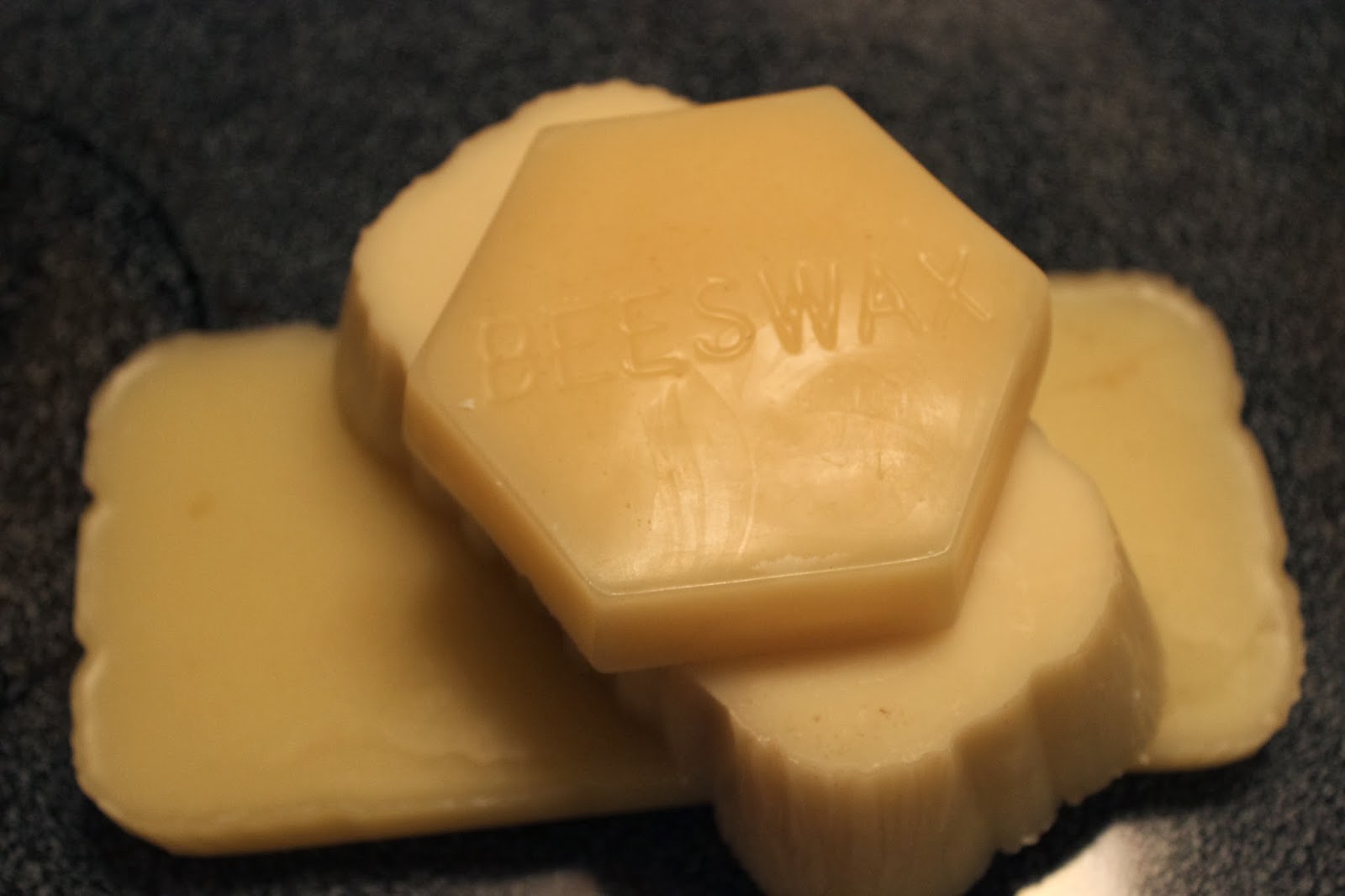
The bees often make what we call burr comb also called wild comb. It's just comb that they create outside of the frame. To make the hive more organized, we sometimes scrape the small bits of extra comb and set it aside. We also collect more wax when we cut the cappings off of the honey in the frames before we harvest it. What to do with all this beeswax? Melt it and filter it of course! So we built a solar wax melter. This uses the heat of the sun to melt the wax and we can filter out the yucky stuff, or "slum gum" and we are left with buttery yellow pure beeswax! We used an old window for the lid, and placed foam insulation on the bottom and sides. So far our melter has heated to 190 degrees Fahrenheit but is usually around 175 on a sunny, Pacific Northwest summer day. The wax melting point is around 140 degrees Fahrenheit, so the wax melter works well for our needs.

Put the wax comb on top of the metal screen,

Let it melt through the screen,

and drip into the baking pan and cool.

Voila! Filtered beeswax!


Sunday, November 11, 2012

Slate Article: How other Animals Choose Their Leaders


How Other Animals Choose Their Leaders

You think our elections are tough? Tell it to the wolves.

Thomas Seeley's colored and numbered bees.
Tom Seeley suggests we turn to the bees to see how they make decisions
Photograph courtesy Princeton Press.


It is hard to escape the sensation that our electoral process is broken. Too much money. Too much bullshit. Perhaps we should turn to nature for insight, remedy, or just salve. The Book of Proverbs implored believers to go to the ant and consider her ways when it came to wisdom and industriousness. Can we also turn to the ant for lessons on democracy?  
The idea that ants, honeybees, or other social animals might do a thing or two better than we do is ancient. The Bible, Torah, and Quran all invoke insect societies. In the Amazon, Kayapo children were once advised to follow the brave, social ways of the ant (and to eschew the more vulgar ways of the termite).
Most recently, Cornell University entomologist Tom Seeley has written a lovely and compelling book titled Honeybee Democracy which suggests we turn to the bees to see how they make decisions. Thanks to the work of Seeley and his collaborators, it is now clear that honeybee hives really are democratic. When it’s time to look for a new nest, options are weighted by the evaluations of many different bees about a site’s qualities—its size, its humidity, the density of surrounding flowers. Individual bees vote with dances, and when the number of dances in favor of some particular site is high enough, the masses are swayed. Together, citizen bees choose, if not perfection, the best possible option.
Advertisement
In ants, choices about how to nest or feed also seem democratic, though a few experts influence the process. Some ants just know more than others.
Forms of democracy also exist in flocks of birds (who must decide when to fly) and troops of monkeys (who decide when to move). In each of these situations, consensus is necessary, and consensus is reached by some form of voting. Democratic decision-making is common in nature; humans did not invent democracy. But there is more to the story.
One of my racquetball buddies, Dave Tarpy (he leads the series, if you are wondering, though I won the last game), studies honeybees decisions. Tarpy was a postdoctoral researcher with Tom Seeley and so has learned Seeley’s democracy-documenting ways, but Tarpy is more interested in queens than Seeley is. How do these solitary leaders become who they are? What allows some queens to succeed over others when there is a power vacuum in the hive?
One aspect of the honeybee royal lifestyle Tarpy studies is mating behavior. He is fascinated by promiscuity, at least in honeybees. Honeybee queens mate multiple times and store sperm in a special internal appendage. They can then allocate the sperm to produce their offspring. Tarpy has shown that more promiscuous queens produce colonies that are more genetically diverse and are less at risk of disease. Given plenty of sperm to choose from, the odds are that at least one father passed on genes resistant to whatever pathogen the colony encounters. In a world in which honeybee colonies appear to be facing their version of the great plague—colony collapse disorder—promiscuity is more important than ever.  
Tarpy also studies how queens are elected. A queen is not a president (the president is not in charge of literally birthing the next generation, for example), yet honeybees do choose their leader.
When honeybees swarm—and head to their new, democratically selected nest sites—their old mother queen goes with them. But not all of the hive members depart. Some workers remain, as do larval bees that have been fed the royal jelly necessary to turn them into queens. (Genetically, queens and workers are identical.) A replacement queen must be chosen from among these ladies in waiting if the society of the remaining daughters is to live on. Two things can happen: If just a small hive is left, the first potential queen to emerge from her royal cell kills all of the other potential queens waiting to emerge. She then takes over. Obviously, this is not the model to which our political system should turn, though it certainly has historical precedent.
The slightly more palatable model for our political system may be what happens when the population of the colony is much larger. In those cases, a second swarm can fly away from the original location. That second swarm also needs a queen. In this case, when the first potential queen emerges, workers prevent her from killing the other potential queens. Instead, they coax those additional queens out of their cells, one at a time. When a second queen emerges, she faces off against the first in what is called in D.C. a debate. Honeybee biologists call it a duel. It is a fight in which the winner of the duel faces subsequent duels, with the ultimate winner taking over the hive. (Each loser is unceremoniously killed and dropped out of the nest with the garbage.)
These duels are the hive dramas most parallel to our own elections. The question is how (or even if) the workers influence which queen wins the duel. Tarpy recently studied what happens when dueling queens are allowed to fight in isolation—without any influence of the workers, that buzzing electorate. He removed queens from their larval cells at different stages so that some were more mature than others and hence would be able to produce more eggs later on. He staged 66 elections, 27 of which were between two high-quality, high-egg-potential candidates; 16 were between one high-quality and one low-quality queen; and 23 were between two low-quality queens. What happened? The bigger queen—which wasn’t necessarily the more mature one—almost always won, even when she was of less value to the hive than her rival. In other words, the winner of the fight was not the individual who would most benefit the masses, just the toughest one. But the results are different when the workers are allowed into the mix. Inside the hive, the winner tends to be no bigger than the loser. Somehow the workers are influencing the dynamics of the election, preventing it from being a simple cage match in which the bigger, badder fighter wins.
Honeybee elections may be the elections in nature most like our own. The citizens of the hive play some role, but a modest one. The workers prevent the queen from killing the other queens before they even have a chance. The workers also, somehow, keep the result of the election from being purely and brutally the outcome from one-on-one war.
Other models of democratic elections seem to be rare. Fire ant queens are winnowed among contenders through simple and brutal battles to the death, battles that can last hours. Wolves beat, pummel, and bite their way to the top of the pack hierarchy. Among nonhuman animals, leaders seem to be most likely to win through dominance or minor warfare. As my colleague Ed Vargo has shown, termites sometimes rely on extreme nepotism. In one of the most common termite species in North America, when queens die, they are replaced by their exact clones.
The rarity of democratic elections in other societies may be an issue of getting good information. When bees make democratic decisions about where to move their nest, they do it on the basis of the direct experience of many different bees. Democracy, as the political scientist Christian List puts it, “is good at pooling information from different individuals.” But it doesn’t make sense to pool information unless you have it. Inside the nests of most societies, conditions are tight and few individuals actually touch and assess the candidates. Only the proximate know enough to vote.
What does all of this tell us about what we should do? If we buy the idea that democracy works in animals only when individual citizens provide good information about the subject of the decision, it may mean our democracy is only as good as our journalists, those forager bees. But it also means that when it comes to electing a leader democratically, we as a species are on our own, trying for something that, while great and beautiful, has little precedent in nature. If the bees were able to read, this is where we might urge them to look to us. Go to the humans thou bee, and learn their ways, learn to struggle toward transparency, truth, and participation.

Sunday, July 29, 2012

Bee Language


Our friend John came to visit us this weekend and he was really drawn to our bees. He recently wrote a paper for college about bee language and figures that humans could learn more about communicating with each other by understanding bee language. That's really something to think about. The honey bees in a colony have multiple ways to communicate with each other. One way they communicate is by "dancing." The waggle dance, the tremble dance and the grooming dance are three dances that have been identified by scientists. The waggle dance is used to communicate information regarding food and water sources among other things.The tremble dance is used when foraging bees need more help at the hive to unload the nectar they have collected. The grooming dance is what is sounds like. It encourages bees to clean each other.

Here is an informative and entertaining video about the waggle dance from NOVA on PBS:
http://video.pbs.org/video/2300846183/ Maybe if we humans communicated more by dancing we would be happier!

I have seen some of our bees doing the waggle dance when we have been checking the hives. Hopefully one of these days I can get a video. In the meantime, enjoy this waggle dance song from Phineas and Ferb:


Saturday, July 21, 2012

Capped Honey! Not Honey Bound


Matt was worried that his bees had brought in so much nectar and stored it in the brood chambers, that there was no room for the queen to lay her eggs. A beekeeper told us the term for that was "honey bound." He added another honey super (which made three) and hoped that the bees would move the food stores around so the queen would have more room to lay. He also took out one full deep frame that was full of capped honey and replaced it with an empty frame for them to draw out. He wrapped the frame in plastic wrap and put it in the freezer. This allows him to be able to feed this food to his bees this fall, while enabling them to have a new empty frame for more brood. Adding the third honey super worked out well because the bees did move lots of the nectar and pollen to make room down in the brood chamber.


The capped honey in the deep super that we put in the freezer. It was capped on both sides.
The bees cleaned the cells out to make room for brood.
We found out a way to get the bees to draw out the comb faster on the plastic frame. You melt some beeswax and using a foam brush, paint wax onto the frame. This just gives them a head start and encourages them to work on it. 
With more wax painted on

Frame with plastic comb


The bees are really going after it and they have capped honey in the honey super too! 


We also got some frame grippers. The frames are getting really heavy with all the nectar and bees! These help to hold the frame up with a bit less effort and awkwardness. 

And here below is a great example of a tight brood pattern in the middle of the frame and and capped honey on the sides and top. This is how the bees and the queen organize the food and the larvae. 


Sunday, July 15, 2012

Bee Bearding

We decided not to check the hives this weekend, and just let the bees work. It has been humid lately and in the upper 70s, lower 80s. We noticed the bees loitering, especially Matt's, on what I will call the "porch" of the hive in the evening when they would normally be inside the hive. We found out that this behavior is called bearding. They do this when it is hot and humid and they need more ventilation. Matt added a honey super to help with crowding. He also drilled some wine cork sized holes so the bees would have another entrance and more air flow. As you can see, it does kind of look like a beard. Our is more like stubble compared to this first picture from http://www.sweetseattlelife.com (don't know these people, but they sound cool!)

http://www.sweetseattlelife.com
This was taken around 8:00 pm. The bees are just hanging out.


Penstemon, Salvia, Lavender, Wallflower, Daylily 


Sunday, July 8, 2012

Chewed Newspaper and Good Weather

It looks like we successfully managed the swarm hive. They had eaten away most of the newspaper and they have been working hard to build new comb. We are hoping that the queen will start laying eggs in the bottom  of the hive because right now there is brood in the honey super. That couldn't be helped though considering that they swarmed and Matt had to put them into a new hive a.s.a.p. They looked good though and we decided to stop feeding the sugar syrup. Matt gave me a turn with the entrance feeder so they didn't have to quit the syrup cold turkey. 
Himalayan Blackberry. Photo by Cheryl Moorehead
It has finally warmed up and stopped raining! It is the middle of the blackberry bloom which is a huge source of nectar for the bees. Nectar is what they use to make honey. When it is raining, the nectar washes away. We are crossing our fingers that the bees can still get enough nectar from the blackberries. 


The bees crack me up when they cling together in chains like circus acrobats!

Matt's hive is doing well too. Matt did scrape off a queen cell. We only found that one, so hopefully the bees aren't getting any ideas . . . Matt also drilled a bee sized hole in his honey super so the bees could have another entrance and more ventilation. The picture was blurry so I will show it next time.

Scraping off burr comb
Lots of bees!

Sunday, July 1, 2012

Post Swarm Post

One of the rebel swarmers

After my bees swarmed, and Matt called me at work to tell me, I got home and we tucked the bees in as best as we could and went to bed ourselves. Whew! 

The Aftermath
As the week progressed, and we wondered what the bees were up to. Matt checked on the "old" hive, (the bees that stayed behind and didn't swarm) on Monday or Tuesday to see if there was any larvae or eggs. If the bees don't have any larvae to take care of, there is a risk that one of the workers could start laying eggs and that is not a good thing. So Matt scraped off any queen cells that he found, and kindly donated a frame of brood from his hive, so the bees would have some babies to take care of. While he was working the hive, he just happened to see a skinny little queen!

Usually, new queens are really hard to find because they are small. They need to be able to go out on a mating flight, and if they are too fat they can't fly. When a new queen hatches, she prepares for a mating flight or two, mates, and then comes back to the hive ready to lay eggs. We didn't know where she was in that cycle, but Matt made a quick executive decision to kill that new queen. Another option would have been to keep her and put her in a queen cage just in case we needed her. He also checked to see if my old queen was still with the swarm and she was.

This weekend, Matt's bees were super crabby! It might have been this crappy weather. We did a routine check of his hive and rotated some frames. We both got stung, Matt on the arm and me on the wrist. I guess they just didn't want to be messed with that day, but it's not as if we've had many nice days to pick from to check on them. Matt added an entrance feeder because it won't stop friggin' raining and the blackberry nectar is getting
all washed away.

Entrance Feeder
Can you find the Queen?
No honey yet!

We decided to combine my swarm hive and the old hive so I would have one stronger hive. To start, we checked the old hive and scraped off all the queen cells we could find. To combine the hives, you need to put a layer of newspaper in between them. The bees chew through it, and by the time they are done, they are used to the queen and they won't kill her. We cut slits in the newspaper to give the bees something to bite on to. Then we put the swarm hive on top. 


Swarm hive
Some of the bees that were out foraging were confused at first, and didn't know where to go but they figured it out eventually. We put a screen bottom board on the tall hive so they could have good ventilation and crossed our fingers that the queen survives and that the bees get to work without any more drama. We will check on them next week to see how they are getting along. In the meantime, the peas from the garden are yummy and the blueberries are getting blue!